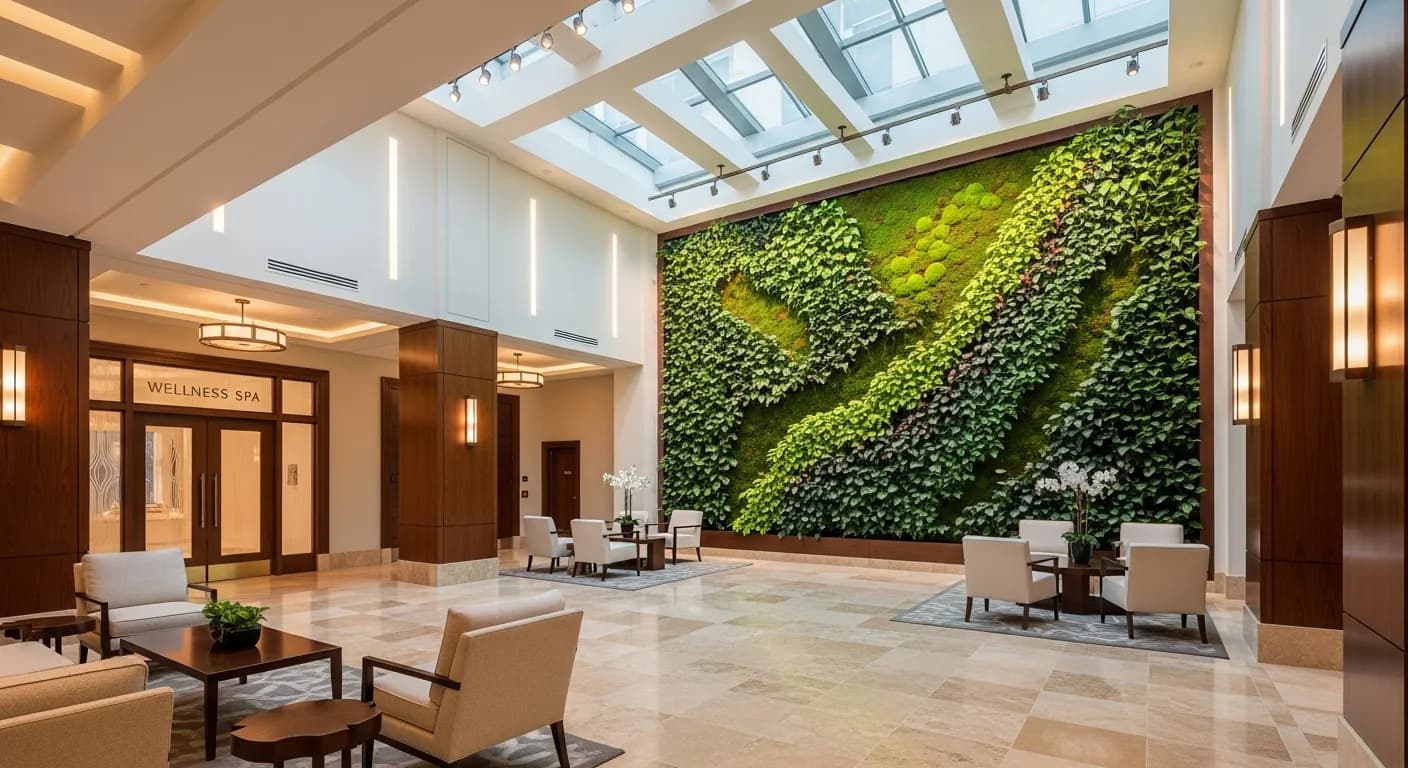
El bienestar no es una amenidad. Es estructura.
Un gimnasio en la azotea no hace un edificio wellness. La diferencia está en el aire, la luz, el sonido y los materiales. Explicamos qué separa a un edificio que dice ser wellness de uno que realmente lo es.
The Difference Between Real Wellness and Marketing Wellness
A rooftop gym does not make a building wellness. An infinity pool does not either. The difference between a building that claims to be wellness and one that truly is lies in the invisible: air, light, sound, and materials.
What Makes a Building Wellness?
WELL and Fitwel certifications evaluate categories that go far beyond amenities:
Air: HEPA filtration, CO2 monitoring, mechanical ventilation with energy recovery, VOC control in materials.
Light: Circadian lighting that adjusts throughout the day. Not just "lots of natural light" — but the right frequency at the right time.
Sound: Acoustic insulation between units measured in STC (Sound Transmission Class). A wellness building has STC >50; a conventional one, ~35.
Water: Advanced filtration, lead and chloramine removal, temperature controlled to prevent Legionella.
Materials: Zero formaldehyde, low-VOC paints, non-toxic adhesives. Every material has a Health Product Declaration (HPD).
The Problem of "Wellness Washing"
More and more developers use the word "wellness" in their marketing without any verifiable backing. It is the equivalent of greenwashing but applied to health.
The difference is simple: if it is not certified by third parties, it is not verifiable. WELL, Fitwel certifications and LEED IEQ credits require independent measurement and verification.
How to Identify Real Wellness
Conclusion
Wellness in a building is not an amenity added at the end of the project. It is a structural decision made from day one of the design. The difference costs money, but the premium pays for it — and the occupants' health is priceless.